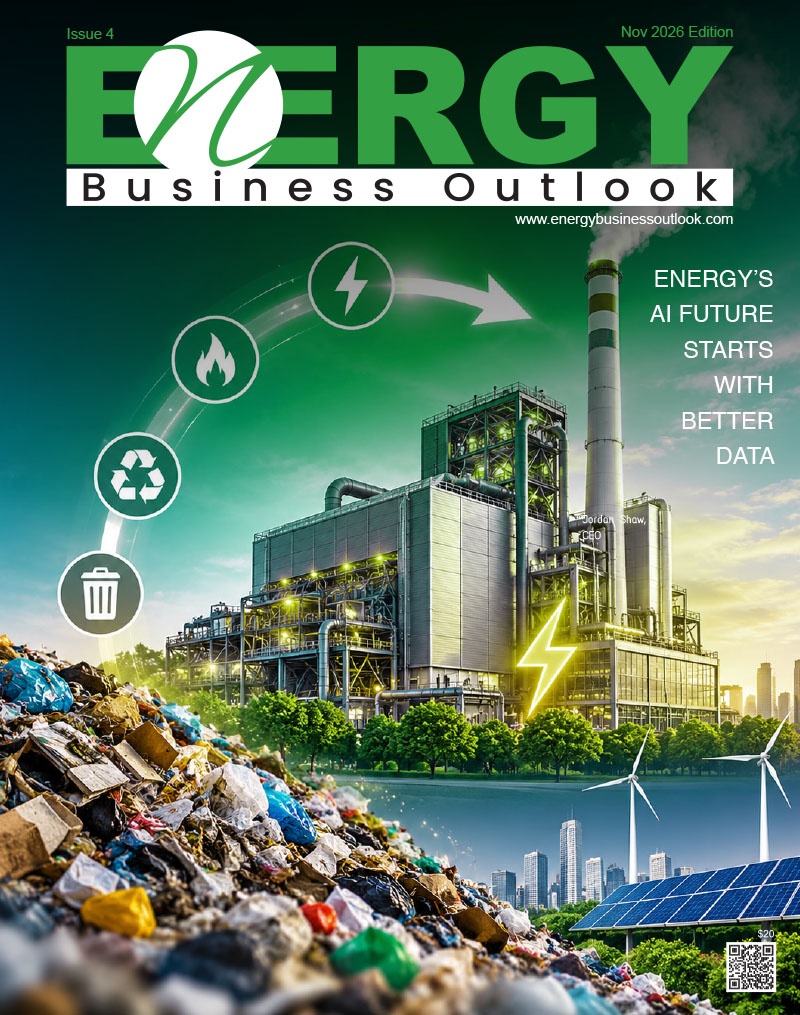

A resource that communities produce every day is increasingly becoming part of the energy transition. Waste from landfills, dairy farms, and industrial and agricultural operations can be transformed into renewable natural gas (RNG), creating an energy source that can be produced from existing resources while supporting decarbonization goals. Mobius Renewables is building its business around that opportunity, combining production, logistics, transportation, and commercialization while working to help RNG evolve from a largely local market into a more globally connected energy commodity. For Cynthia Walker, CEO of Mobius Renewables, the opportunity is closely tied to what she calls the energy trilemma of reliability, affordability, and sustainability. “Renewable natural gas rises to the top of all of those requirements in this moment,” she says. Turning waste into energy can create a sustainable resource close to where it is generated, while a larger market could encourage more projects and increase the impact of RNG.
Mobius Renewables was formed in December 2025, bringing together an experienced leadership team with deep knowledge of the energy sector. Cynthia spent much of her career in energy, including many years as an executive at Occidental Petroleum after beginning her career in financial services and investment banking.
Today, under her leadership, the business has been structured to participate across the RNG value chain. Mobius currently operates in four countries and across more than 50 assets. Its role extends beyond production to logistics and transportation support, as well as direct sales of RNG to end users and customers. The company also draws on a diversified production portfolio that includes landfill gas, dairy manure, industrial wastewater, agricultural residues, food-processing waste, and other organic waste streams.
That diversity matters because not every customer or end market values RNG in the same way. Different feedstocks can produce molecules with different environmental characteristics, while varying regulations can influence how those molecules are certified and valued. For investors, Cynthia says, the breadth of the portfolio provides resilience. For customers, it creates the flexibility to address specific requirements rather than forcing every application into the same model.
One of the industry's biggest obstacles is the fragmented regulatory and incentive environment surrounding RNG. Different markets across the U.S., Europe, Japan, and other parts of Asia use different systems for defining, certifying, and verifying renewable gas. The result is a complex marketplace in which the same broad category of renewable energy can have different values depending on where and how it is used.
Cynthia explains the issue through the U.S. transportation-fuels market. The federal Renewable Fuel Standard assigns credits based on the source of the alternative fuel, while California’s Low Carbon Fuel Standard places greater value on larger reductions in carbon intensity. Landfill-based RNG and dairy-manure-based RNG can therefore carry very different values depending on the program under which they are evaluated. For Mobius, navigating these differences and contributing to greater alignment in definitions, certification, and verification are important parts of building a larger and more liquid market. Creating greater consistency, Cynthia believes, would make RNG easier to trade, finance, and scale.
In regard to technology, Mobius takes a pragmatic, technology-neutral approach, prioritizing proven gas-treatment, upgrading, compression, transportation, and interconnection technologies that can be matched to each project’s feedstock, gas quality, operating conditions, and end market. As Cynthia says, “Our team combines deep industry expertise with a disciplined and innovative approach to operations, helping us turn opportunities into reliable, high-performing assets.”
Cynthia explains that capital discipline is equally important. Mobius does not want to build projects at any cost simply to increase its footprint. It evaluates the economics, technical requirements, feedstock characteristics, expected growth, and end markets before determining the appropriate design. Gas characterization is one of the first steps. Understanding the incoming gas and its quality helps Mobius design facilities that can upgrade it efficiently, safely, and reliably. The company also considers whether the customer’s underlying business is growing or remaining relatively stable. Where appropriate, facilities are designed with capacity for expected near- and medium-term feedstock growth, while practical expansion opportunities are considered during the initial design process.
Mobius also draws on relationships and market knowledge across the U.S., Canada, and Europe to design, construct, operate, and commercialize facilities. The goal is not simply to bring a plant online, but to ensure it operates reliably once it does. This integrated model allows Mobius to match feedstock pathways, carbon-intensity characteristics, environmental attributes, logistics capabilities, and contract structures with the requirements of regulated and voluntary end markets.
Mobius’s growth strategy combines optimization of existing assets, disciplined organic development, selective acquisitions, and long-term commercial partnerships. Each opportunity is evaluated against project-level economics, operating risk, feedstock security, market access, and the ability to create durable value. In the U.S., the company is watching opportunities created by both organic development and consolidation, including transactions involving larger portfolios and individual assets. At the time of the interview, two U.S. projects were under construction and three more were under development, with projects scheduled to come online from the end of the year through 2029. Once the current project set is operating, Cynthia expects Mobius to double its U.S. production. Through its Redo Biosolutions joint venture, Mobius is developing four projects across Norway and Sweden, with a focus on opportunities connected to the FuelEU Maritime program and dairy-manure-based RNG. In France, the company is focused primarily on agricultural waste and sees continued potential in a market that Cynthia describes as the largest biomethane market in Europe.
Mobius is already working with customers in Japan, South Korea, and Singapore as those markets develop strategies for decarbonizing natural-gas supply chains. The long-term objective is clear, increase production across its geographic footprint while helping create the global demand required to make RNG a more widely traded energy commodity.
Cynthia Walker, CEO
mobiusrenewables.com
“Our team combines deep industry expertise with a disciplined and innovative approach to operations, helping us turn opportunities into reliable, high-performing assets.”