Renewable energy set to deliver nearly all new U.S. power capacity as clean sources break new records
Washington, D.C., 27 February 2026 – The United States is entering a new phase in its energy transition, with solar, wind, and battery storage expected to dominate power generation growth in 2026. New data reviewed by the SUN DAY Campaign, based on figures released by the US Energy Information Administration, shows that these clean energy sources are projected to add 62% more generating capacity in 2026 than they did in 2025.
This surge means that renewables and battery storage will account for virtually all net new electricity-generating capacity added in the U.S. this year, highlighting a clear shift away from fossil fuels.
Solar power breaks new ground
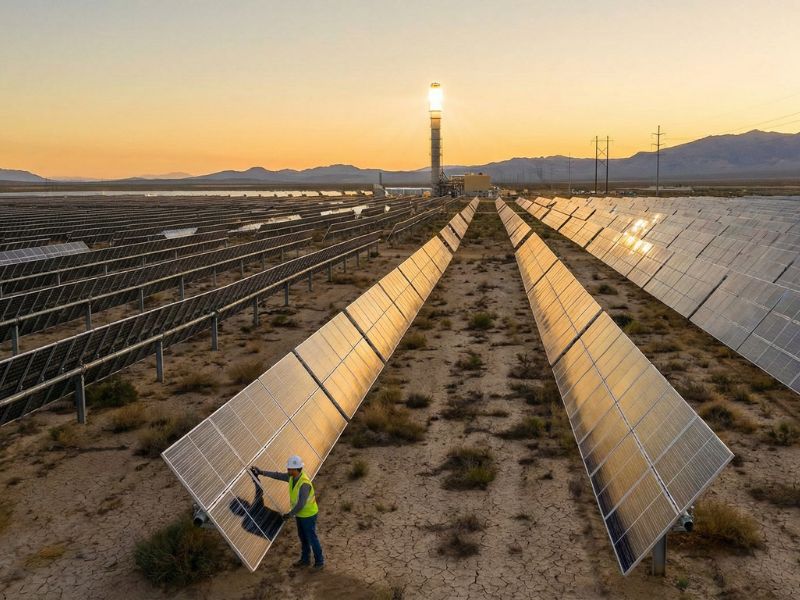
Solar energy continued its rapid rise in 2025, once again confirming its position as the fastest-growing source of electricity in the country. Utility-scale solar projects expanded sharply, while rooftop and other small-scale systems also recorded solid growth.
Together, utility-scale and small-scale solar generation increased by about 28% in 2025 compared to the previous year. Solar power supplied just under 9% of total U.S. electricity generation, up from less than 7% a year earlier. It now makes up more than one-third of all electricity generated from renewable sources.
This growth is expected to continue. Forecasts indicate that tens of thousands of megawatts of new solar capacity will be added by the end of 2026, reinforcing solar’s role as a cornerstone of the U.S. energy mix.
Wind stays firmly on top among renewables
Wind energy remained the single largest renewable power source in the United States in 2025. Wind turbines generated more than 10% of the nation’s electricity, marking another year of steady growth.
Combined with solar, wind power helped push clean electricity generation to new heights. Together, wind and solar produced significantly more electricity than coal and also exceeded nuclear generation, underscoring the growing competitiveness of renewable energy.
Renewables approach one-quarter of total generation
When hydropower, biomass, and geothermal energy are added to wind and solar, renewables produced nearly 26% of all U.S. electricity in 2025. This placed renewable energy second only to natural gas in total generation.
At the same time, electricity output from gas-fired power plants declined, while coal capacity continued to shrink, reflecting long-term structural changes in the power sector.
Battery storage emerges as a key player
Battery energy storage is becoming an essential part of the clean energy system. In 2025, utility-scale battery capacity expanded dramatically, and even larger additions are planned for 2026.
These systems help balance supply and demand by storing excess solar and wind energy and releasing it when needed, making renewables more reliable and flexible.
All new capacity in 2026 points to clean energy
Looking ahead, projections show that renewables and battery storage will provide all net new utility-scale generating capacity added in 2026. Capacity from fossil fuels is expected to decline, while no new nuclear capacity is currently forecast.
If these projections hold, total renewable generating capacity could surpass natural gas by the end of 2026. Solar capacity alone is expected to exceed wind, coal, and nuclear capacity, highlighting how quickly the energy landscape is changing.
Ken Bossong, executive director of the SUN DAY Campaign, said the data clearly shows the momentum behind clean energy. He noted that the rapid expansion of solar, wind, and battery storage is reshaping the U.S. power sector and that even larger changes may still lie ahead.















Latest News