Nacelle Solutions was born out of the desire to produce energy in a cleaner and safer way. When the company was founded in 2014 by brothers Patrick C. Graney IV and Gov Graney, the original goal was not to chase trends or build something in clean energy. It was to solve a clear problem in front of them: the heavy reliance on diesel fuel at oil and gas drilling sites, despite the fact that cleaner, cheaper natural gas was frequently already produced onsite. That starting point— grounded in efficiency, economics, and the road, and safer job sites. What made this work, however, was not just the idea—it was execution. Nacelle developed mobile gas processing units built on trailers, designed to move with and adapt to constantly changing conditions. This early phase forced the company to become exceptionally good at small-scale gas conditioning and high-touch operations. Every site was different. Equipment had to be set up, torn down, and redeployed continuously. Technicians needed to diagnose problems in real time, often in remote locations, under demanding conditions. Over time, Nacelle built a team of highly skilled operators and engineers who became specialists in gas processing, safety, and field execution. Just as important, the company developed a culture that valued reliability, accountability, and learning from experience.
That foundation positioned Nacelle naturally for its next evolution: renewable natural gas (RNG). As the RNG market began gaining momentum around 2016–2018, the company recognized a familiar challenge. Biogas produced from landfills, agriculture, and organic waste sources needed to be cleaned and upgraded before it could enter pipelines. Volumes were too small and dispersed to justify massive, centralized plants, but the operational complexity was significant. Nacelle’s experience with modular systems, mobile processing, and on-site operations made the transition almost intuitive. Unlike fossil natural gas, RNG derives from biogas, which typically contains only about 50 percent methane along with carbon dioxide and other contaminants. Cleaning this gas is technically demanding, and each feedstock—manure, landfill waste, food waste—behaves differently. Nacelle began designing, building, and operating RNG facilities on behalf of developers, often stepping into the middle of projects to provide the technical backbone that allowed developers to focus on financing and commercialization.
Over time, Nacelle noticed a shift in how the market behaved. Many RNG developers initially planned to operate their facilities themselves. As projects matured, many developers found the operational complexity higher than expected, creating demand for specialized O&M and optimization. As Patrick explains, “There isn’t one perfect design that works everywhere. Every project has its own realities, and those realities show up once you start operating.” This is where Nacelle’s operations and maintenance (O&M) business has become a major differentiator. Rather than treating RNG facilities as static assets, the company approaches them as dynamic systems that require continuous optimization.
A key part of this approach is scale—not just in terms of size, but in experience. Nacelle operates across multiple geographies, climates, and project types. That exposure allows the company to recognize recurring issues and anticipate problems before they escalate. Gov describes this as knowing “why each piece is there, not just how it works.” It also enables the company to simplify complexity for clients. Internally, Nacelle often refers to itself as the “easy button,” a reflection of its role in absorbing operational burden so developers and investors can focus on growth rather than firefighting.
The decarbonization impact of this work is significant. Renewable natural gas captures methane that would otherwise has a much higher warming impact than CO₂, particularly over the near term. In some programs and pathways (especially agriculture), RNG can qualify for negative carbon intensity, meaning the process removes more greenhouse gas emissions than it creates. By blending negative carbon intensity RNG with conventional natural gas, customers can move toward net-zero emissions without compromising energy reliability. As Gov puts it, “We’re taking something that was going into the atmosphere and turning it into a usable resource, while helping companies achieve their sustainability goals.”
When Performance Matters Most: Operational Turnaround
Nacelle’s value becomes most visible when businesses find that their projects struggle. In one representative case, an agriculture RNG facility had operated for three years at only 40 percent of expected performance. Financial stress mounted, and investor confidence eroded. Nacelle stepped in to take over operations and conduct a full engineering and process review. The team identified multiple root causes—ranging from workforce issues to control.
Nacelle’s value becomes most visible when businesses find that their projects struggle. In one representative case, an agriculture RNG facility had operated for three years at only 40 percent of expected performance. Financial stress mounted, and investor confidence eroded. Nacelle stepped in to take over operations and conduct a full engineering and process review. The team identified multiple root causes—ranging from workforce issues to control system deficiencies—and implemented targeted changes. Within six months, the facility was operating at 90 percent of its intended capacity. The turnaround was not just technical; it stabilized the project economically and restored confidence among stakeholders. In fact, what sets Nacelle apart is not any single technology, but the integration of experience, execution, and realism. The company avoids both extremes—overengineering solutions that are unnecessarily expensive and cutting costs in ways that compromise long-term performance. Instead, it focuses on total cost of ownership and practical outcomes.
Today, as renewable energy markets mature and expectations become more demanding, Nacelle Solutions occupies a critical role. It bridges the gap between ambition and reality, ensuring that renewable natural gas projects do not just exist on paper, but perform consistently in the real world.
Quote: We’re taking something that was going into the atmosphere and turning it into a usable resource, while helping companies achieve their sustainability goals
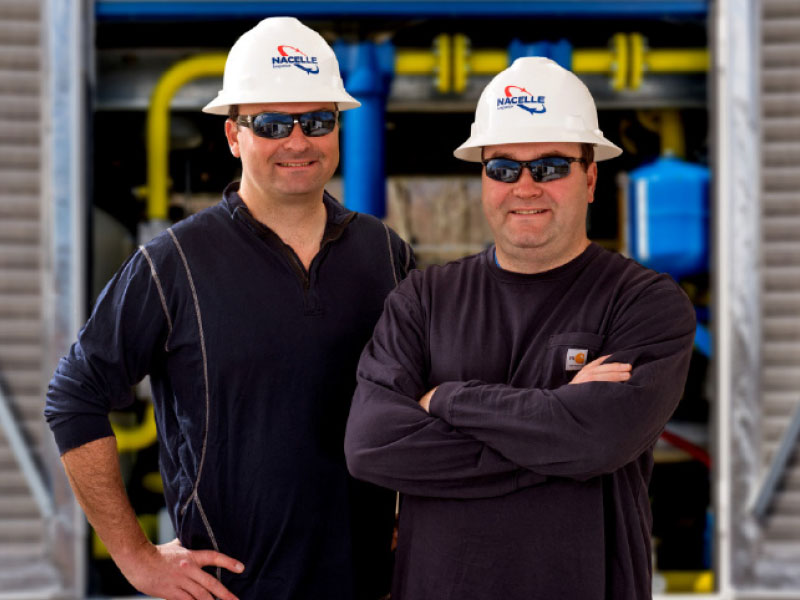
Gov Graney, Patrick C. Graney IV, Co-Founders
nacellesolutions.com
"We’re taking something that was going into the atmosphere and turning it into a usable resource, while helping companies achieve their sustainability goals.”